
Introduction
The global power tool landscape has shifted. In 2026, it’s no longer just about having the most torque; it’s about efficiency, battery intelligence, and long-term reliability. Whether you are a professional contractor looking for a fleet of tools or a wholesale distributor seeking a reliable manufacturing partner, understanding the “DNA” of a modern power tool is essential.
In this guide, we break down the critical factors that separate professional-grade equipment from disposable alternatives.
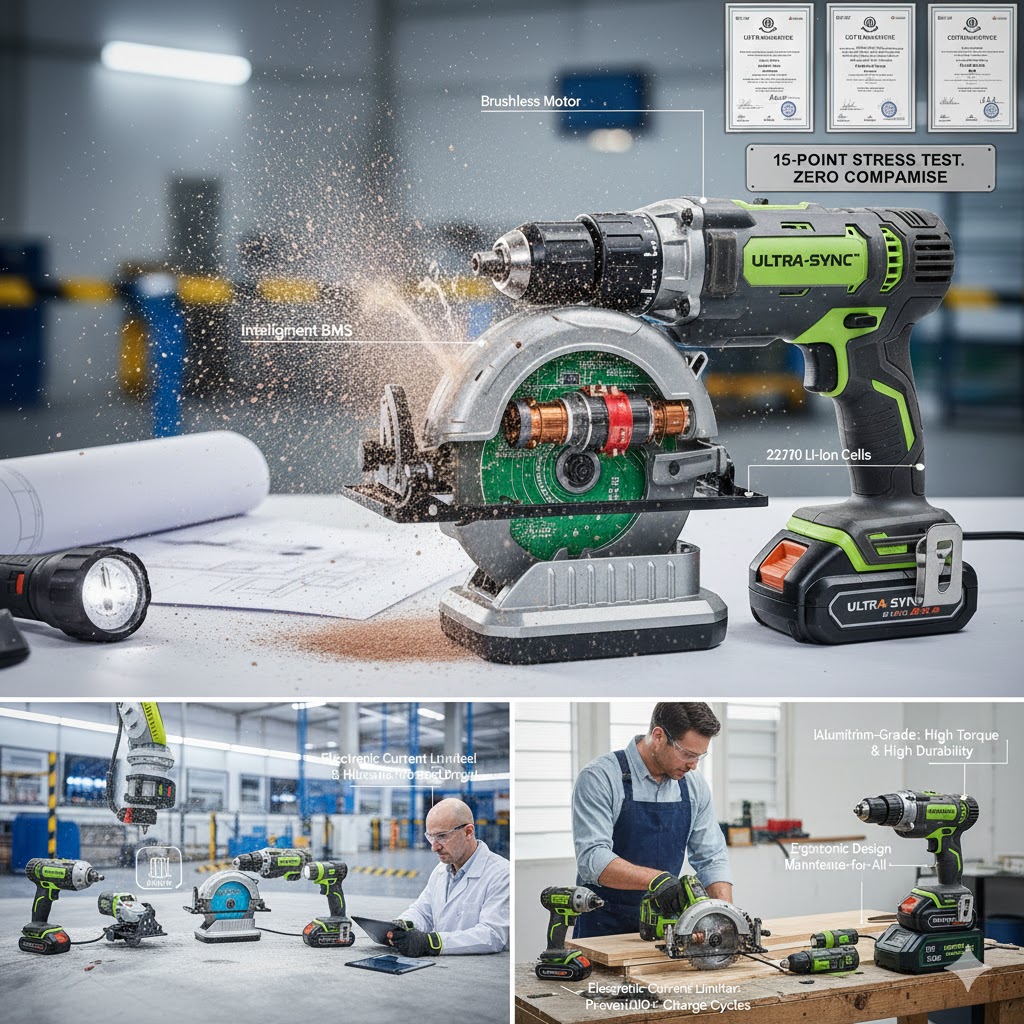
1. The Heart of the Machine: Brushless Motor Technology
In 2026, the debate between brushed and brushless is over. Brushless motors (BL Motors) are the gold standard.
-
Why it matters: Without carbon brushes, there is no friction or energy loss through heat.
-
The Benefit: You get up to 40% more run-time per charge and a tool life that lasts 3-5 times longer than traditional models.
- Pro Tip: Look for tools with “Electronic Current Limiter” protection to prevent motor burnout during heavy-duty tasks.
2. Battery Management Systems (BMS) & Cell Quality
A cordless tool is only as good as its battery. However, the secret isn’t just the capacity (Ah), but the BMS (Battery Management System).
-
Thermal Management: Professional tools now feature active cooling and individual cell monitoring. This prevents overheating during rapid charging.
-
Compatibility: A unified battery platform (one battery for 20+ tools) is no longer a luxury—it’s a requirement for operational efficiency on job sites.
3. Durability Beyond the Surface
External aesthetics can be deceiving. To identify a high-performance tool, you must look at:
-
Gear Housing: Aluminum or magnesium alloy housings dissipate heat much better than plastic, protecting the internal transmission.
-
IP Ratings: For outdoor or masonry work, ensure your tools have at least an IP54 rating for dust and water resistance.
-
Ergonomics: In 2026, “Vibration Absorption Technology” is key. Reduced vibration means less user fatigue and higher precision.
4. Meeting Global Standards (A Checklist for Wholesalers)
If you are importing tools for resale, compliance is your safety net. Ensure your supplier provides:
-
Safety Certifications: CE (Europe), UL (North America), or SAA (Australia).
-
Battery Safety: UN38.3 and MSDS reports are mandatory for international shipping.
-
Warranty Support: A reliable manufacturer should offer at least a 1-year warranty on the tool body and battery.
Conclusion
Choosing the right power tool in 2026 requires looking past the price tag and evaluating the motor, battery intelligence, and build quality. Investing in high-performance tools today saves thousands in replacement costs and downtime tomorrow.